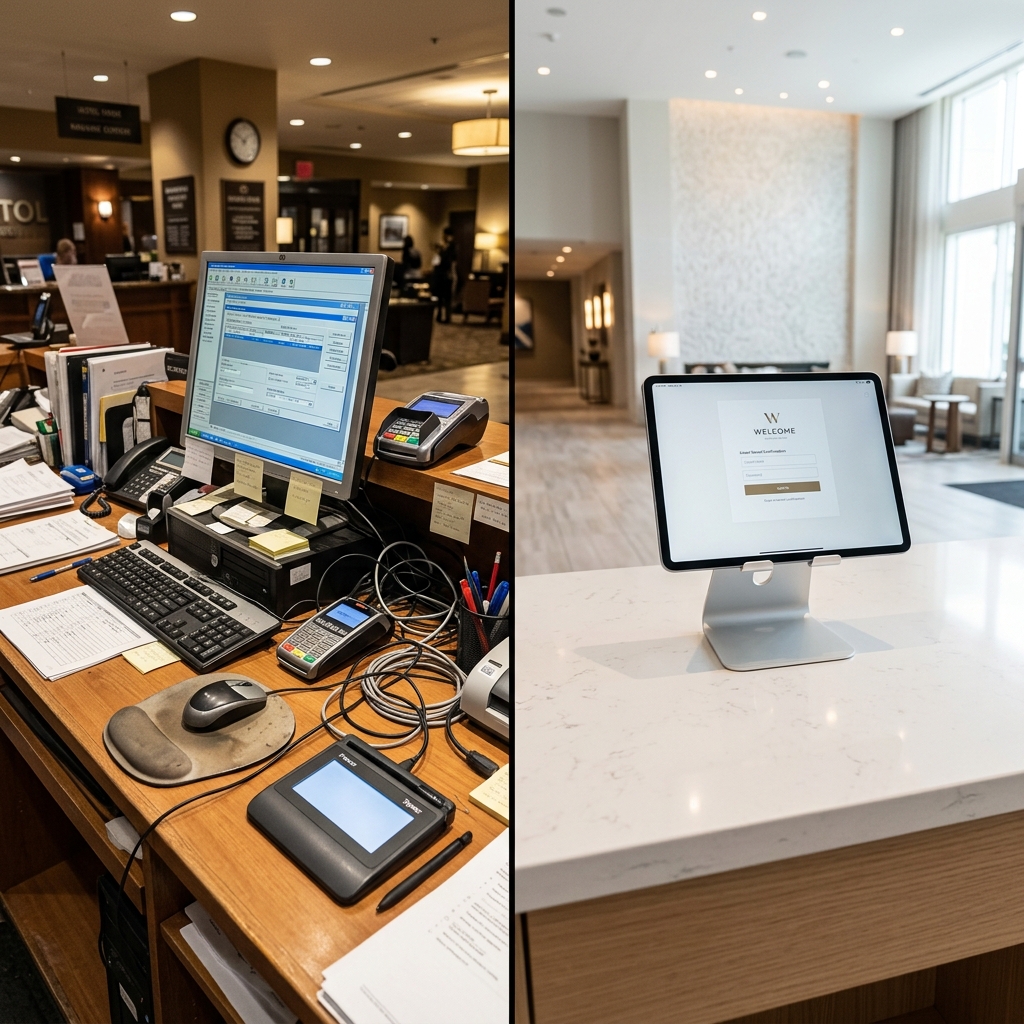
For many hoteliers, the thought of upgrading their core technology stack brings a sense of dread. The Property Management System (PMS) is the beating heart of the hotel, and the idea of a “rip and replace” migration is synonymous with operational chaos, extensive staff retraining, and significant downtime. However, as we noted in our analysis of HITEC 2026 trends, the industry is shifting. You no longer need to replace your legacy PMS to deliver a modern guest experience.
The smarter upgrade path is deploying a Guest Management System (GMS) as an integration layer.
The Agony of the Rip-and-Replace
Legacy PMS platforms are often deeply entrenched in a property’s operations. They handle accounting, inventory, and core reporting reliably. However, they were built for an era before smartphones and AI. When hotels attempt to migrate away from these systems entirely, they often face multi-month transitions that disrupt the very guest experience they are trying to improve.
The GMS Overlay: Modernization Without Disruption
As hotel management system developers, we advocate for a modular approach. A GMS is an enterprise-grade hospitality platform designed to transform outdated hotel guest journeys into premium, mobile-first digital experiences—without replacing existing PMS infrastructure.
By building a robust integration layer (often utilizing Node.js and Express), a GMS can facilitate high-volume, real-time data synchronization with legacy platforms. This means your staff can continue using the backend they know, while the guest interacts with a sleek, modern interface.
Real-World Impact: Reducing Queue Times
In a recent deployment of our custom Guest Management System (GMS), this overlay strategy yielded dramatic results. The goal was to build a next-generation guest experience layer in a strict 2-month timeline, preserving existing hotel infrastructure while delivering a luxury brand aesthetic.
By implementing a frictionless digital check-in process—where guests securely upload ID and complete payment before arrival—the GMS successfully reduced front desk queue times by an astounding 80%. This eliminates manual data entry by instantly syncing OTA booking details directly into the property management system.
Unlocking Advanced Capabilities
Adding a GMS layer doesn’t just improve the UI; it unlocks entirely new operational capabilities:
- Auto Room Allocation: Smart algorithms automatically assign rooms based on guest preferences, VIP status, and availability, removing manual operational bottlenecks.
- Mobile Keys & Lobby Bypass: Integration with digital locks allows guests to bypass the lobby entirely and unlock their rooms using their smartphones.
- Night Time Automation: As we’ll explore in our Practical Blueprint for Implementing AI, advanced AI models (like Claude & Gemini) can automate routine front-desk tasks, ensuring flawless 24/7 night-time operations.
Furthermore, integrating plugins like smart housekeeping and maintenance modules becomes significantly easier when you have a modern GMS layer acting as the central nervous system for operations.
You don’t need to endure a painful PMS migration to modernize your hotel. Contact NSDBytes to learn how our bespoke hospitality software development services can deploy a transformative GMS layer for your property.

Written by the NSDBytes Team
We are passionate about software development, AI integration, and helping businesses achieve operational excellence through modern technology.