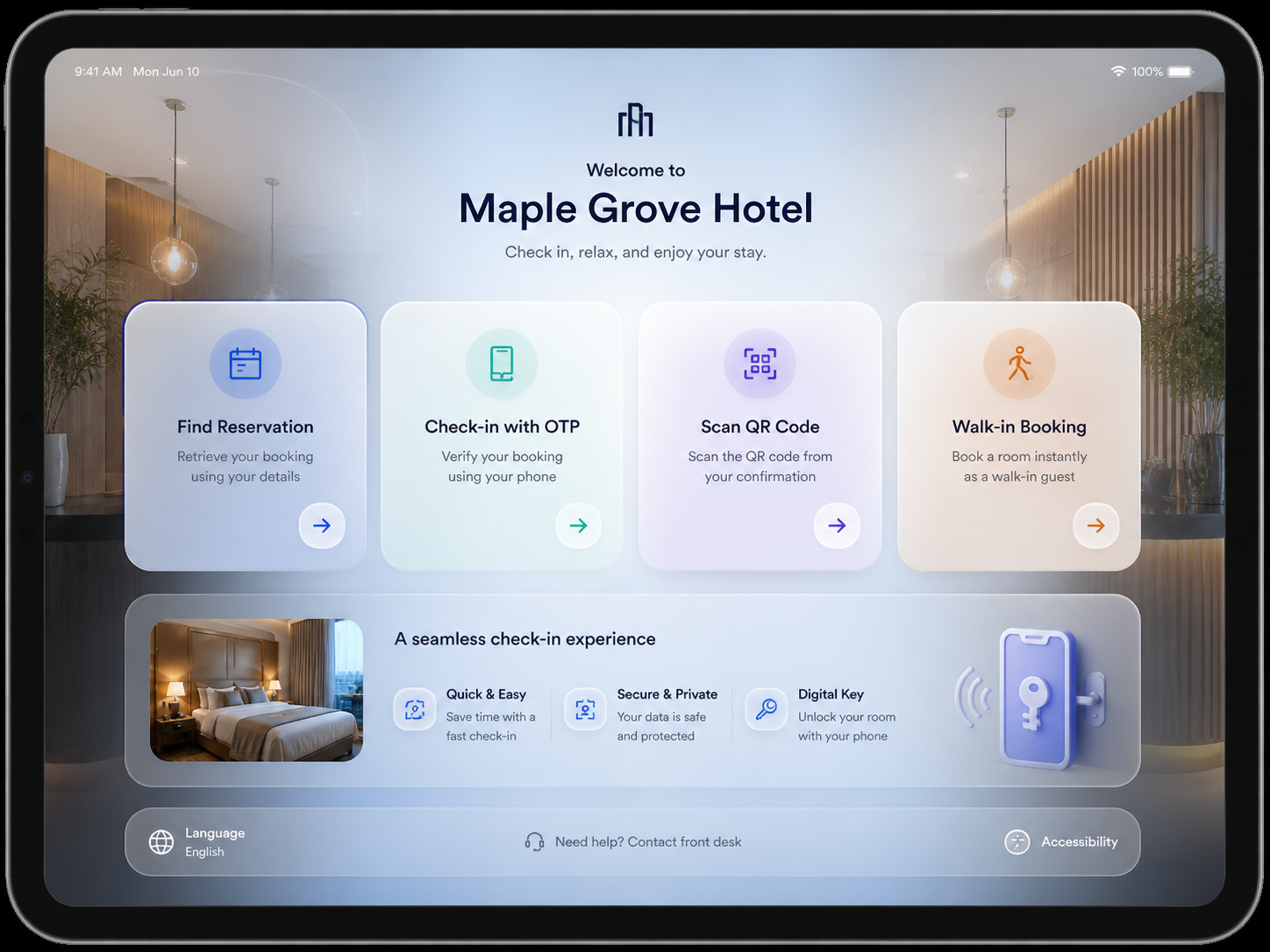
The hospitality industry in 2026 is moving rapidly towards frictionless guest experiences. One of the biggest bottlenecks for any hotel, from boutique properties to massive resorts, is the front desk check-in queue. Guests expect a seamless, mobile-first experience similar to airline boarding. After a long flight or drive, the last thing any traveler wants is to stand in a slow-moving line simply to receive a piece of plastic.
In this comprehensive guide, we’ll explore the top 5 digital check-in solutions for hotels in 2026, highlighting why integrating a specialized layer on top of your existing Property Management System (PMS) is not just the smartest move—it’s an operational necessity.
The True Cost of the Check-In Queue
Before diving into the solutions, it’s crucial to understand the mathematical cost of friction at the front desk. Industry studies consistently show that guest satisfaction drops by 50% if the wait time exceeds 5 minutes. Furthermore, a stressed, waiting guest is significantly less likely to purchase upgrades, book spa treatments, or dine at the hotel restaurant.
When you eliminate the queue, you aren’t just saving time; you are actively increasing your Revenue Per Available Room (RevPAR).
1. GMS (Guest Management System) by NSDBytes
Taking the number one spot is our very own GMS (Guest Management System), engineered specifically for hotels that want to modernize their guest journey without the massive cost and disruption of ripping out their legacy PMS.
Why GMS Leads the Pack in 2026:
- Seamless PMS Integration: Whether you are using Oracle OPERA, Mews, Cloudbeds, or Protel, GMS sits perfectly on top of your existing infrastructure via secure, bidirectional API syncs.
- Progressive Web App (PWA) Architecture: Guests do not need to download a heavy app. They receive a secure link via SMS or email, allowing them to check in, scan their ID, and generate a mobile key directly from their browser.
- Intelligent Upselling: The pre-arrival sequence dynamically offers room upgrades, early check-in, and dining reservations based on real-time availability.
- Automated Housekeeping Sync: Guests are automatically notified the second their room is cleaned, preventing them from hovering in the lobby.
By layering GMS over existing infrastructure, our partner hotels have successfully reduced check-in queues by up to 80% while seeing a 22% increase in pre-arrival upsell conversions.
2. Standalone Kiosk Solutions
Self-service kiosks have evolved dramatically over the last five years. The 2026 models feature AI-driven facial recognition, secure passport scanning, and instant, eco-friendly keycard dispensing.
The Pros:
- Excellent for high-volume airport hotels and budget segments.
- Reduces staffing requirements during peak hours.
- Highly resilient hardware that operates 24/7.
The Cons:
- Kiosks can sometimes feel transactional, stripping away the personalized touch expected in luxury and boutique segments.
- High upfront capital expenditure for the hardware and maintenance contracts.
- Still requires the guest to physically interact with a machine in the lobby, rather than checking in from their taxi.
3. Native App Solutions
Many major chains (like Marriott or Hilton) build and maintain their own native iOS and Android apps. These are incredibly powerful loyalty drivers.
The Pros:
- Deep integration with loyalty programs and points tracking.
- Persistent presence on the guest’s home screen.
- Push notifications for on-property marketing.
The Cons:
- App fatigue is real. The modern guest often refuses to download a 150MB app for a two-night stay at an independent hotel. Download rates for non-chain native apps rarely exceed 15%.
- High development and maintenance costs to keep up with Apple and Google OS updates. This is precisely why PWAs (like GMS) are overtaking native apps for independent and mid-scale properties.
4. Chatbot and Messaging-Driven Check-In
A massive trend in 2026 is integrating check-in flows directly into the platforms guests already use daily: WhatsApp, Apple Messages, and SMS.
How it Works: Guests receive an automated WhatsApp message three days prior to arrival. Through conversational AI, they can verify their details, upload a photo of their ID, and receive a secure Apple Wallet or Google Wallet digital key—all without ever leaving their chat app.
The Verdict: This conversational approach is gaining massive traction among boutique and lifestyle hotels. It feels highly personal and boasts incredibly high open rates (over 90% for WhatsApp). However, it requires a robust AI backend to handle edge-cases and guest questions seamlessly.
5. Automated PMS Add-ons
Almost all modern, cloud-native PMS providers (like Mews or Apaleo) offer their own basic check-in modules out of the box.
The Pros:
- Zero integration effort. It comes bundled with the PMS.
- Single vendor billing and support.
The Cons:
- These modules are often treated as afterthoughts by the PMS vendors. They usually lack extensive UI/UX customization, meaning your hotel’s check-in flow looks identical to thousands of other hotels.
- They typically lack the deep, intelligent upselling algorithms found in dedicated platforms.
Making the Right Choice for Your Property
Choosing the right digital check-in solution depends entirely on your hotel’s scale, guest demographic, and existing technology stack.
If you are a 500-room airport hotel, biometric kiosks might be your best bet. If you are a global mega-chain, investing millions in a native app makes sense.
However, for the vast majority of mid-tier, boutique, and independent luxury properties, a dedicated, seamless PWA web portal that integrates tightly with your existing PMS—like NSDBytes’ GMS—provides the absolute highest ROI. It requires no app downloads, personalizes the guest experience, drives ancillary revenue, and drastically reduces the operational burden on your front desk staff.
Ready to modernize your guest journey? Explore how GMS can transform your hotel’s operations today.

Written by the NSDBytes Team
We are passionate about software development, AI integration, and helping businesses achieve operational excellence through modern technology.
Need something like this built?
We build and maintain our own hospitality products like GMS. Let us build yours.